Comprehensive Study Guide: Pakistan's 2026 Solar Energy Regulatory Transition

A big policy change in Pakistan’s power system has happened. The National Electric Power Regulatory Authority (NEPRA) has replaced the old Net-Metering system with a new Net-Billing system. This means people who have solar panels at home (called prosumers) will now earn Less Money when they send extra electricity back to the grid. At the same time, the price they pay to use electricity from the grid stays High.

The authorities say this change is needed to keep the electricity system stable and financially strong. But many critics and politicians believe this decision could Slow Down Solar Energy Growth in the country.

Along with this, the government has added new Fixed Charges for home users to help pay for electricity infrastructure. The information also includes helpful details for consumers, like current Solar Equipment Prices and Basic Electrical Safety Tips.

A few weeks ago, NEPRA notified new regulations converting net metering into net billing. Under the new framework, rooftop solar consumers will receive only five-year contracts. Exported electricity will be purchased at Rs 11 per unit, down from Rs 26.

Even after the announcement, Prime Minister Shehbaz Sharif has stepped in and asked for a review of the decision to make sure existing consumer agreements are protected.

Click to Download NEPRA Notification PDF

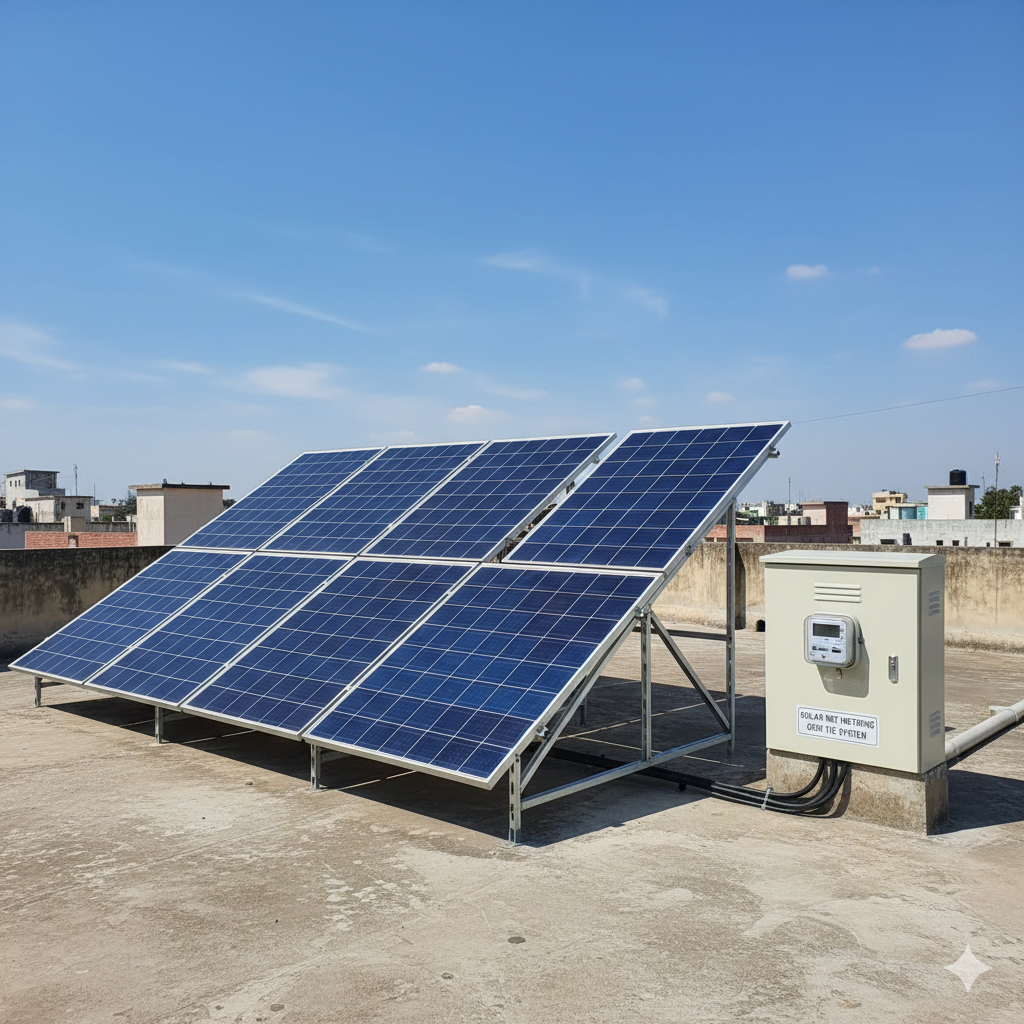
AI-generated visualization.

How do net metering and net billing differ for consumers?

For consumers, the primary difference between net metering and net billing lies in how electricity is valued: net metering uses a one-to-one unit exchange. In contrast, net billing calculates imports and exports as two separate financial transactions at different prices.
Key Differences at a Glance
• Valuation Method: Under net metering, every unit of electricity you send to the grid cancels out one unit you take from the grid. In net billing, you purchase electricity from the grid at a high retail price (approx. Rs. 37–55 per unit) but sell your surplus back at a much lower “buyback” rate (approx. Rs. 10–11 per unit).
• Billing Formula: Net metering follows a simple “Import Units – Export Units” formula to determine the net billable amount. Net billing raises a full bill for your consumption first and then applies a monetary credit for the electricity you exported.
• Impact on Savings: Net metering allows a consumer to potentially reduce their bill to zero if production exceeds consumption. Net billing significantly reduces these savings because the price you are paid for electricity is roughly one-fourth of what you pay the utility.
The Financial “Shock” Example
The sources highlight the dramatic difference using a sample scenario where a household imports 500 units and exports 400 units:
• Under Net Metering: The consumer is billed for the net difference of 100 units (approx. Rs. 3,300).
• Under Net Billing: The consumer is charged for all 500 units at retail rates (approx. Rs. 22,500) and receives a credit for the 400 units at the lower buyback rate (approx. Rs. 4,000), resulting in a much higher final bill of roughly Rs. 18,500.
Policy Status in 2026
The National Electric Power Regulatory Authority (NEPRA) introduced the Prosumer Regulations 2026 to officially transition the country from net metering to net billing. However, following widespread backlash, the Prime Minister directed that existing seven-year contracts for current solar users be protected, while new applicants will likely fall under the net billing framework

How do fixed monthly charges impact my solar savings?

Fixed monthly charges impact your solar savings by establishing a mandatory baseline cost on your electricity bill that you must pay regardless of how much power your solar panels generate. Even if your system produces enough energy to offset your entire consumption, you will still receive a monthly bill based on your sanctioned load (the capacity of your connection).
Summary of Impact
Feature
Impact on Solar Users
Mandatory Cost
You pay even if you export more than you import.
Load Dependency
The higher your connection capacity (kW), the higher the fee.
Grid Contribution
Ensures solar users help pay for grid maintenance and capacity payments.
Are you aware of the sanctioned load on your current electricity bill? Knowing that number would help you calculate exactly how much these new charges might subtract from your monthly solar savings.

How are the Charges Calculated?

The charges are determined by your monthly consumption slab and your sanctioned load (measured in kilowatts). For 2026, the rates range from Rs. 200 to Rs. 675 per kW per month.
1–100 units: Rs. 200–275 per kW.
101–200 units: Rs. 300 per kW.
301–500 units: Rs. 400–500 per kW.
Above 600 units: Rs. 675 per kW.
The Impact on Your Savings
Elimination of “Zero Bills”: Under previous rules, a high-performing solar system could reduce a bill to zero. Now, a prosumer with a 10kW connection and a fixed charge of Rs. 500/kW would face a baseline payment of Rs. 5,000 every month before a single unit of grid electricity is even used.
Slower Return on Investment (ROI): Because you are paying a significant amount in fixed fees, your total monthly savings are lower. This naturally extends the time it takes for your solar system to pay for itself.
Cross-Subsidy Shift: These charges were introduced to prevent “cost-shifting,” where solar users avoided paying for grid infrastructure while still relying on it for backup. The revenue from these charges is used to lower electricity costs for the industrial sector.

Scroll to top